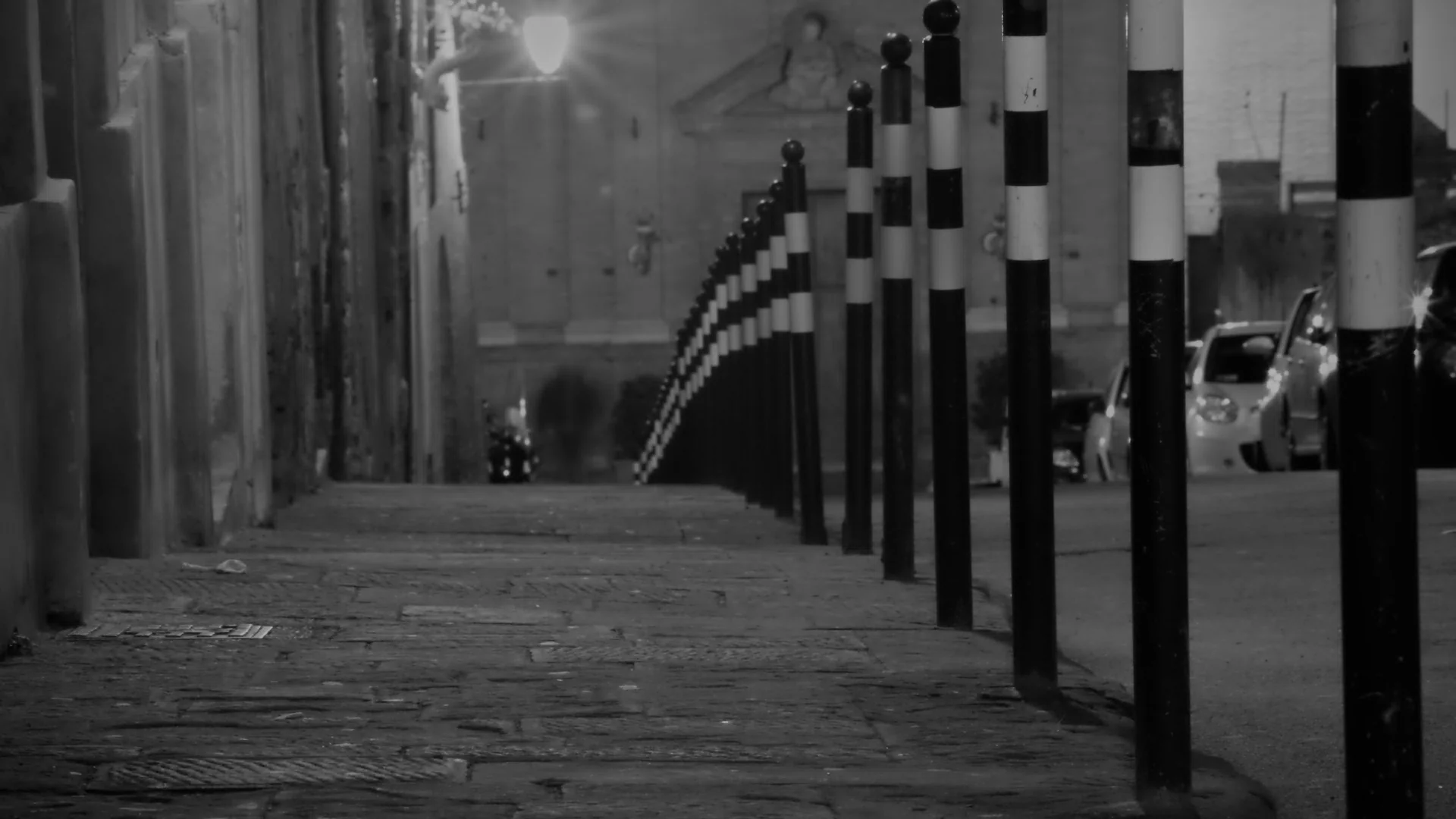

City Layers is built on the idea that a city cannot be told through a single gaze.
It is a street photography project structured in layers: autonomous narrative levels, each with its own rhythm, sensibility, and way of observing urban space.
The city shifts with light, with time, and with the attention of those who move through it — and each layer captures a different possibility of reading it.
Together, these layers form an open narrative map, constantly evolving.
City Layers is not a collection of images, but a system of paths.
What is City Layers
City Layers is the central framework of my street photography project — the place where the different layers of the city are gathered and placed in relation to one another.
It is not a portfolio, nor simply a collection of photographic series. It is an evolving narrative structure that allows the city to be observed from different perspectives without blending them into a single voice.
The project was created as a connecting hub between these levels, simplifying the reading of each individual layer while giving them depth within a broader vision.
City Layers becomes the thread that links my photographic works together: a point of orientation connecting Light Lines Stories to current and future layers, accompanying the viewer before entering each distinct visual experience.
The logic of layers
The concept of layers emerges from the tension between unity and multiplicity.
A city never reveals itself in just one way. It is made of overlapping levels that coexist, intersect, sometimes ignore one another, and at other times respond. Every gaze captures a different rhythm, a different presence, a different form of attention.
Each layer is conceived as an autonomous space, with its own visual and narrative language.
When separated, it reveals its singular voice — its rhythm, its sensibility, its distinctive way of reading the city. This separation is not fragmentation, but clarity: it allows each project to exist fully, without being diluted or confused with others.
At the same time, the layers remain in dialogue.
When viewed together, they create a stratified mosaic of perspectives and narratives, where plurality becomes coherence and individual readings expand into a broader vision. They share the same urban space and the same temporal dimension, forming a more complex and layered understanding of the city.
City Layers therefore operates on two levels:
it can be explored through a single layer, or experienced as a whole, where differences interact and complement one another.
In this dual possibility — individual reading and collective vision — the project finds its balance.
The Layers
From here, you can enter the individual layers of the project.
Each path is autonomous, designed to be explored freely, following the rhythm of perception and experience.
Connections
As each layer unfolds, connections and resonances begin to emerge. Subtle variations link one path to another. What appears in one trajectory finds echoes in another — shifting in meaning, evolving over time.
This is not about adding visions together, but allowing them to remain in dialogue.
Differences become clearer, affinities surface, and the city reveals itself as a complex organism made of presences and absences, returns and variations, repetitions that are never identical.
It is within this relational space that City Layers fully takes shape — not as a sequence of projects, but as a network of perspectives that together build a deeper, more stratified perception of urban experience.
Beyond the map
The city remains open before the gaze.
The paths are traced, the layers ready to be explored.
There is no single route to follow, no fixed order to respect. Each visit becomes a personal experience, each discovery a new encounter with light, rhythm, and urban life.
City Layers unfolds before the viewer, inviting exploration and the possibility of finding one’s own map within the movement of its layers.